
Everything has to earn its place.
Schedule a ConsultationComplex commerce requires intention. Every platform, project role, activity, and deliverable should contribute meaningfully to the outcome.
We design the technology and the engagement around that principle, then use AI-accelerated, engineer-governed execution and real-time visibility to make every client investment go further.
Put every capability in the right place.
Much of the hard work in commerce is unsexy: product data, pricing, inventory, fulfillment, and the logic that connects them.
The goal is not to add a platform for every capability. It is to put each responsibility in the simplest place that fully supports the business.
ERP, OMS, and CRM
Customers, pricing, inventory, orders
PIM and DAM
Product content and assets
Search
Discovery and relevance
WMS
Fulfillment and operational execution
Commerce platform, when needed
Cart, checkout, and commerce state
Specialized services
Dynamic pricing, inventory, fulfillment, and other business-specific logic
We add platforms, custom code, integration layers, and architectural complexity only when they create real value.
Every role and activity has to earn its place.
Complex projects tend to accumulate people, meetings, documents, handoffs, and process simply because that is how large implementations are normally run.
We work differently. Every role, activity, and deliverable exists because it contributes directly to the outcome.
Lean teams. Direct ownership.
Our engineers understand the business context, shape the solution, make the technical decisions, and own execution end to end, with UX expertise added where the work requires it.
No account layers. No unnecessary handoffs. Every role exists because it contributes directly to the outcome.
AI-accelerated execution. Engineer-governed.
Specialized AI agents support requirements, implementation, testing, analysis, and other repeatable work throughout our delivery process.
Our engineers provide the context, architecture, judgment, and quality control, and remain accountable for the outcome.
The goal is simple: accomplish more useful work with every hour a client invests.
Real-time visibility. Predictable execution.
You and our team work from the same operational picture throughout the engagement: scope, progress, budget, risks, decisions, and what happens next.
That visibility makes it easier to make good decisions early, before unnecessary work turns into unnecessary cost.
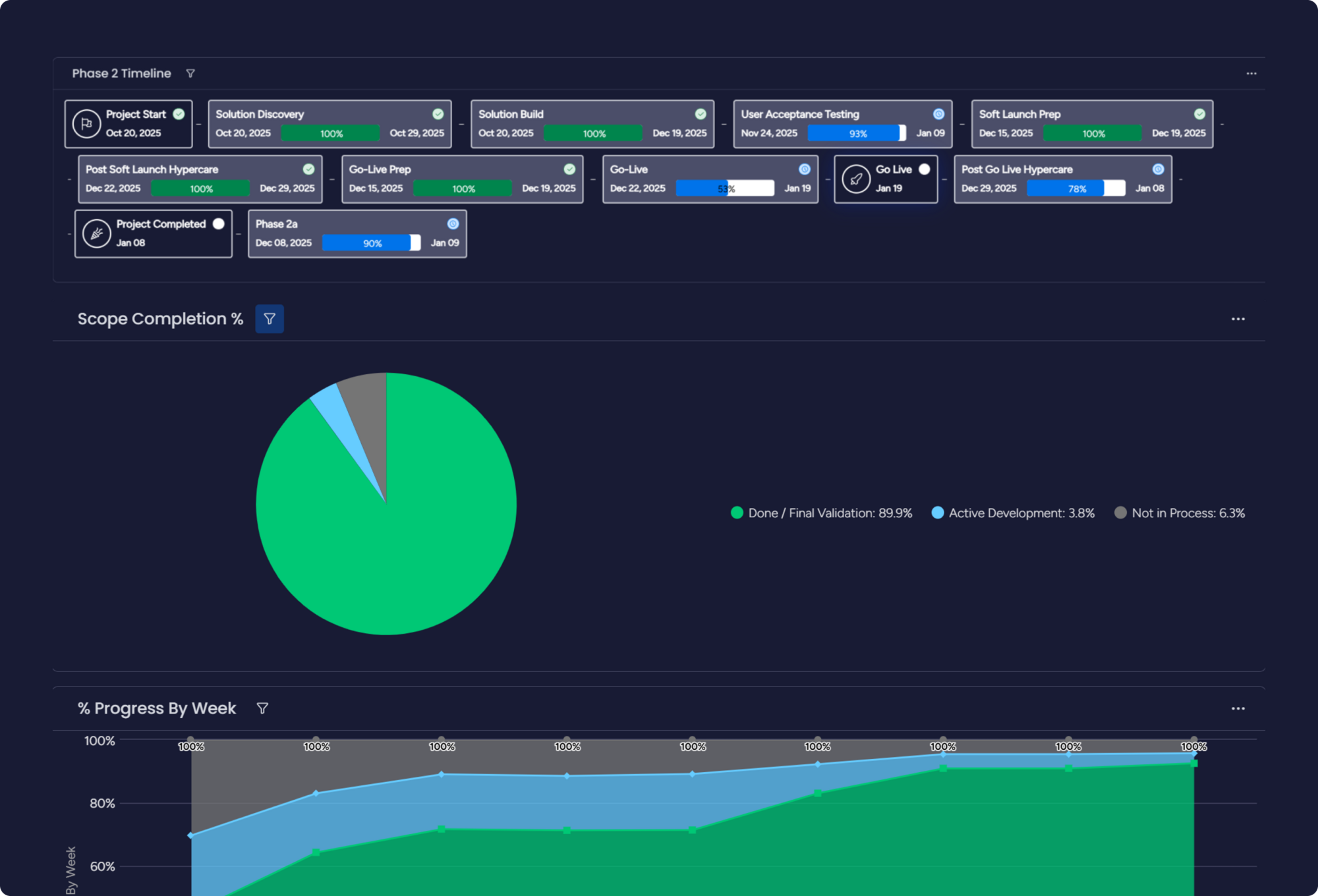
Progress and Timeline Tracking
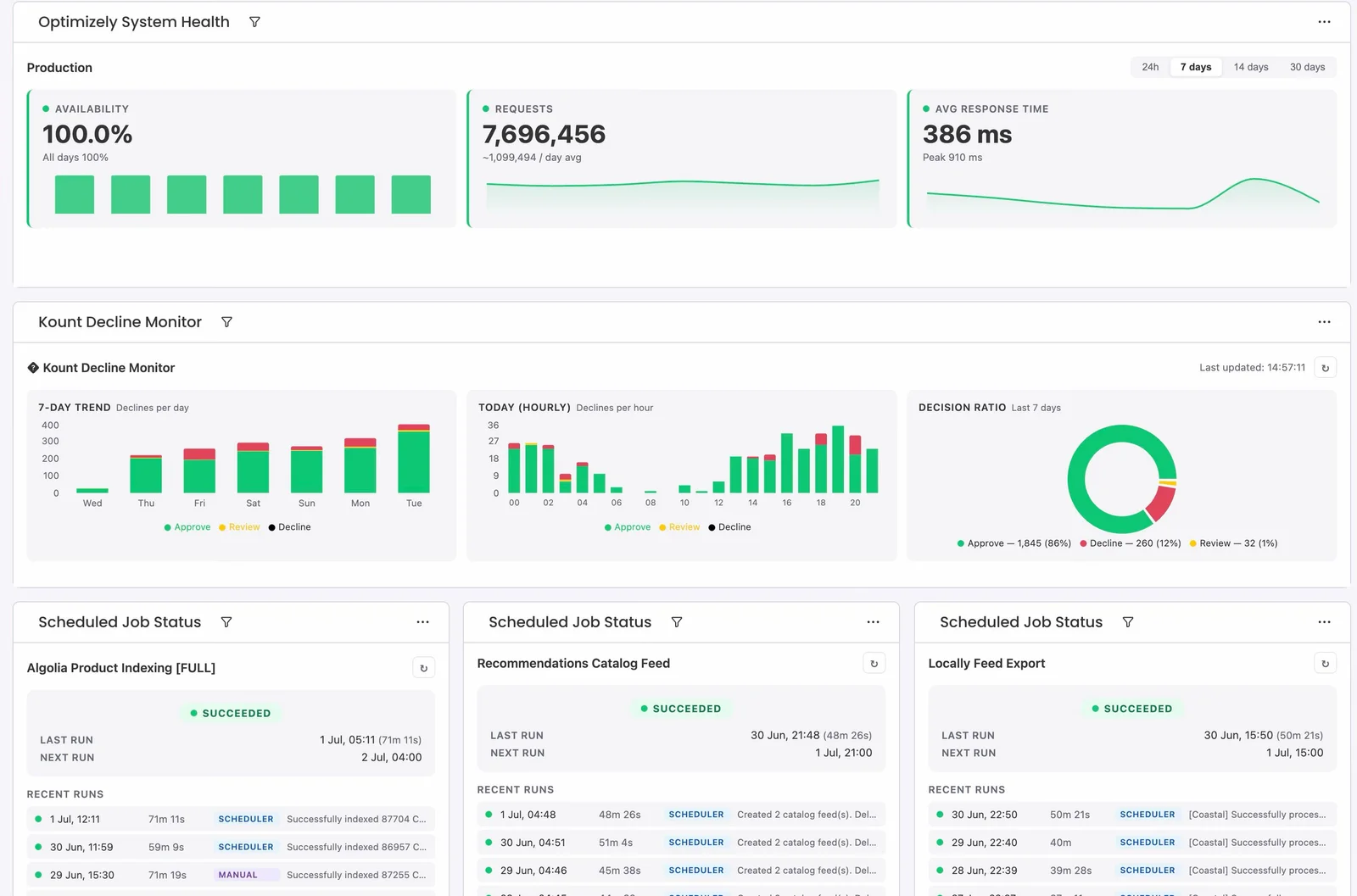
System Health Monitoring
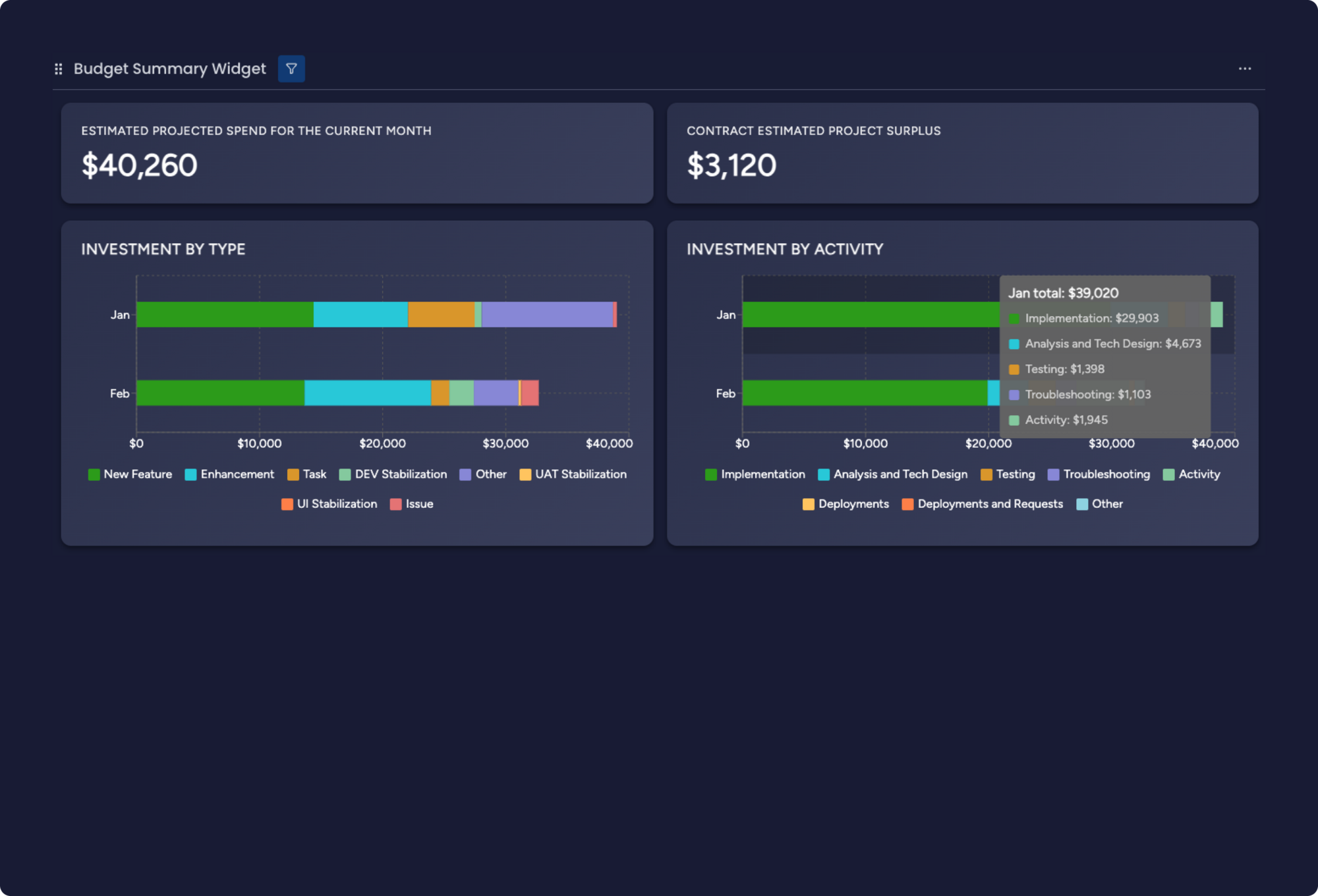
Investment and Budget Alignment
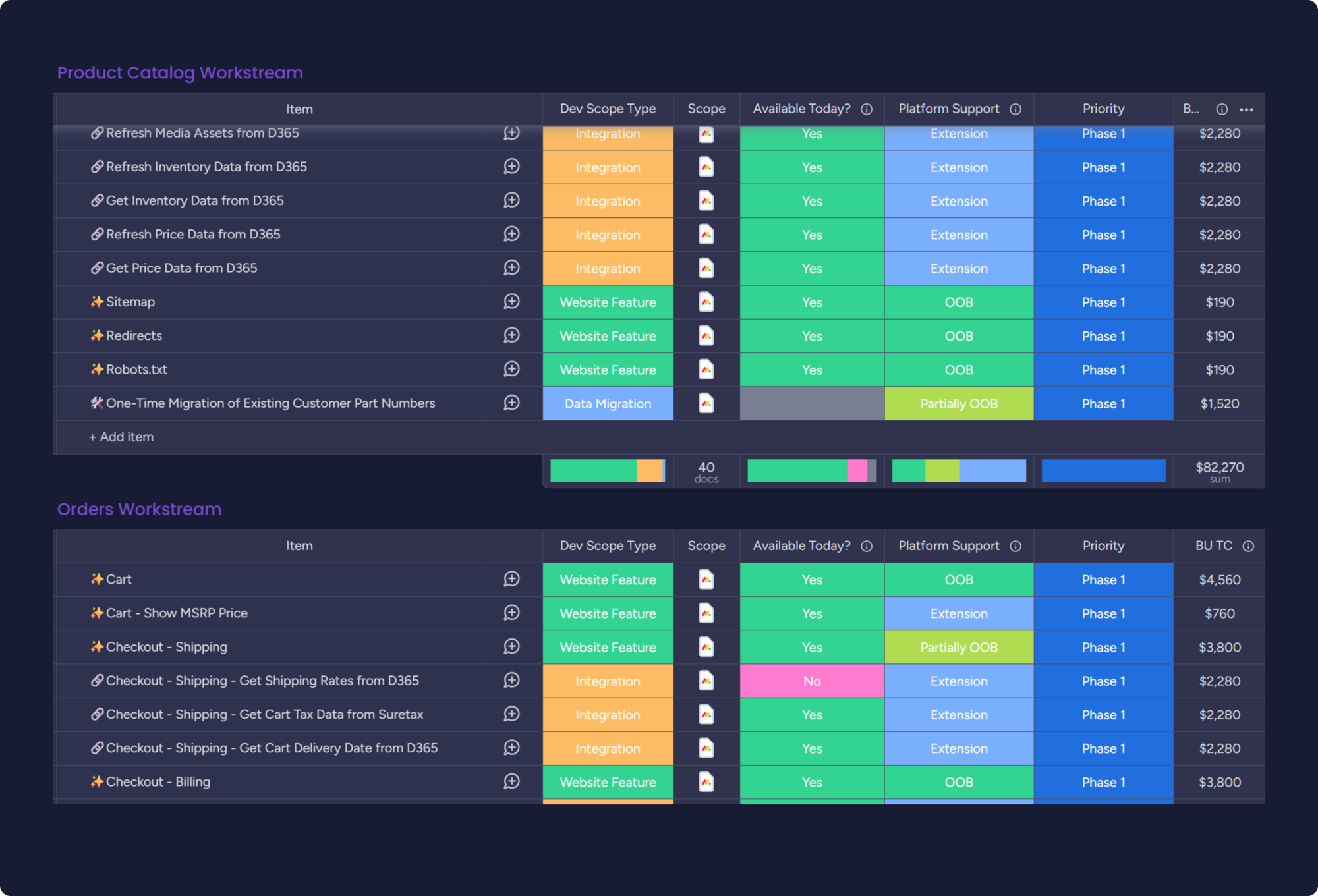
Scope Definition and Change Control
How an engagement progresses.
01Assess
We map the commerce ecosystem, business requirements, systems, integrations, pain points, and outcomes that matter, including what already works and should remain in place.
02Architect
We decide what belongs where, which platforms and custom capabilities are actually necessary, and choose the simplest architecture that fully supports the business.
03Implement
Our team designs, builds, and integrates the solution using AI-accelerated, engineer-governed workflows, with real-time visibility throughout.
04Operate
We support, monitor, and extend the system after launch, continuously prioritizing the work that creates the most value as the business evolves.
What does your commerce environment actually require?
Start with an honest conversation about what your business actually requires. We’ll help identify what’s essential and what can be simplified.
Schedule a Consultation