

Turning a complex buying journey into a driver of growth.
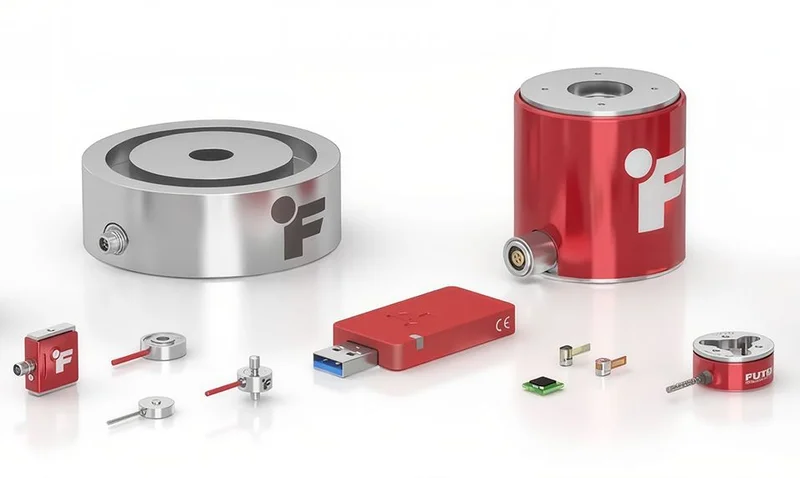
Finding the right FUTEK product can take some work. Customers are navigating detailed specifications, thousands of products, and components that need to work together.
FUTEK saw an opportunity to make that journey easier. Luminos helped turn a complex product experience into a clearer path from “I know what I need to do” to “I know what I need to buy.”
Independent purchasing is up. Records broken in 2026.
The Business Need
Make the Complexity Easier to Buy.
FUTEK's customers are engineers working across aerospace, medical, robotics, automotive, and industrial applications. They understand technical products. Finding the right combination of FUTEK products can still take some work.
A customer may start with an application, then work through the right sensor, instrument, cable, accessories, calibration, and other components needed to build a complete solution.
FUTEK had thousands of products, years of technical knowledge, and tools built to support that process. The experience had also evolved around people who already knew the catalog well. As the business looked toward its next stage of growth, more of that expertise needed to work for customers online.
The platform itself was also becoming harder to extend. FUTEK needed more flexibility to improve the customer experience and give its own teams greater control over where it went next.
One measurement. Multiple decisions.
A complete solution often includes more than just a sensor.
Find the right sensor for your application
Pair with the right instrument
Ensure compatibility
Add what you need
Include calibration and support services
Everything needs to work together.
The Approach
Make the Journey Do More of the Work.
We started by getting underneath the buying journey.
FUTEK's customers had plenty of product information. They needed a better way to move through it. We looked at how customers were finding products, comparing options, configuring a solution, determining what worked together, and getting to a purchase. Then we rebuilt the experience around that journey.
Luminos moved FUTEK from its homegrown CMS to Optimizely CMS 12, creating a more flexible foundation while keeping the ecommerce and ERP processes already working for the business in place.
Then we brought more of the buying process together.
Customers can now land directly on a product page, understand their options, access technical information and pricing, and start configuring from there. As they make selections, the configurator narrows the available options and surfaces compatible components to help build a complete solution.
Experienced customers can move quickly.

Those who need more guidance get it along the way. And when they're ready, they can complete the purchase online or bring FUTEK's sales and application engineering teams into the process through a quote.

We took the knowledge that made FUTEK's team so valuable in the buying process and put more of it to work in the digital experience.
Give FUTEK the Keys.
We built the new experience with FUTEK's long-term ownership in mind.
Business teams gained more control over day-to-day content, developers gained a stronger foundation to build on, and FUTEK gained more ownership over how the experience evolves.
The goal was always to leave FUTEK in a position to take the platform forward. We built it to hand over.
The Outcome
The Shift to Self-Service Stuck.
The change showed up in how customers were buying.
Since launch, FUTEK has seen a sustained increase in business coming through independent web orders compared with sales-assisted orders. More customers are finding what they need, working through the configuration, and completing purchases online.
Throughout 2026, FUTEK has consistently generated around $4 in web revenue for every $1 in sales-assisted revenue, compared with roughly $2.40 before launch.
And the shift has lasted.
FUTEK has also broken its previous monthly sales record multiple times in 2026. The company credits broader growth to several factors, including pricing, new products, sales activity, and other initiatives. The sustained increase in independent web purchasing gives FUTEK another strong signal that the digital experience is doing more for the business.
More customers can navigate a highly technical purchase on their own, while FUTEK's experts remain there for the customers who need them.
Could Your Digital Experience Be Doing More of the Selling?
If customers need a product expert just to find their way through your website, there's room to make the experience work harder.
Luminos helps B2B manufacturers turn complex product journeys into digital experiences customers can navigate, configure, and buy from with confidence.